
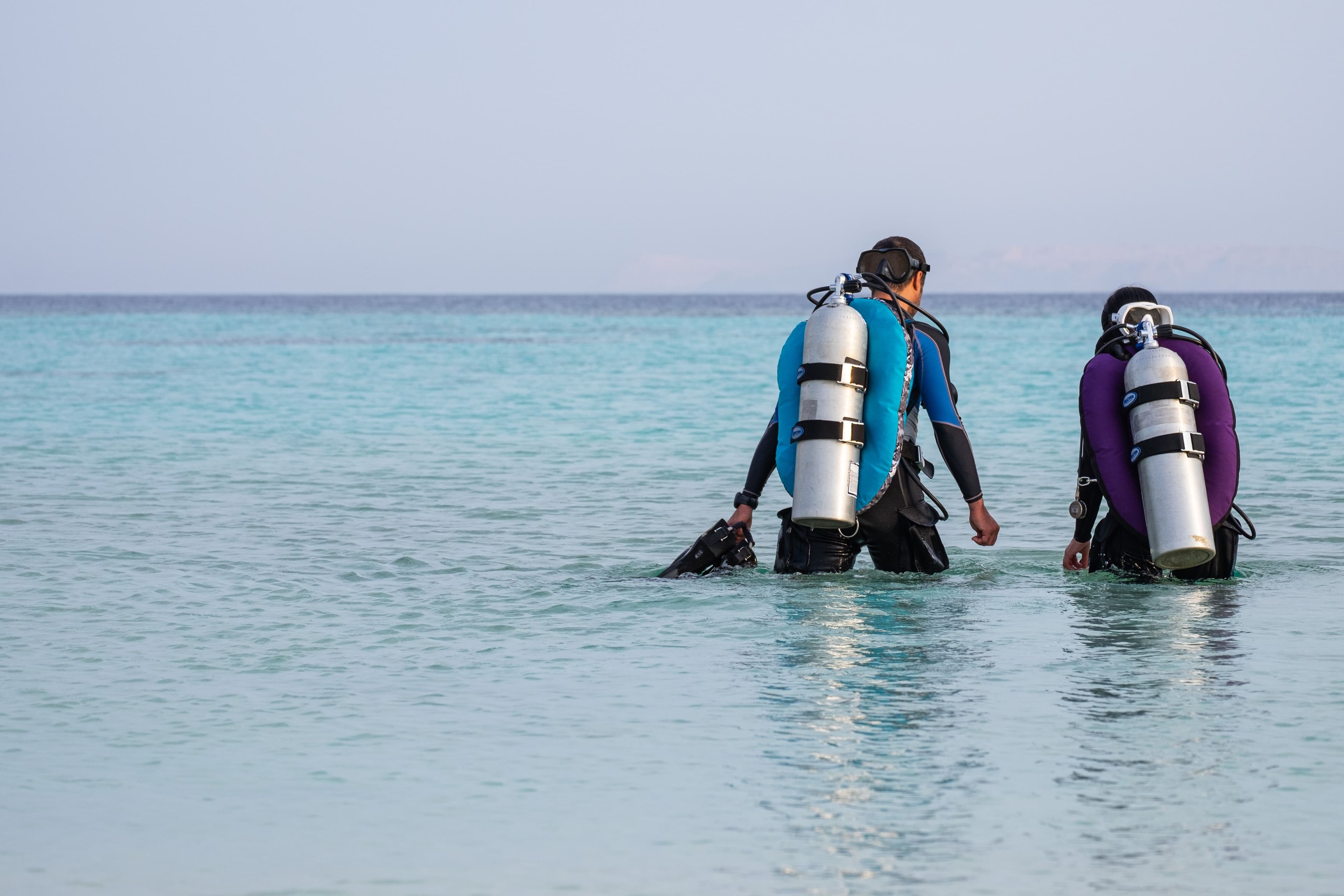
Naturally, parents like to share hobbies and experiences with their children. Luckily, there are specialized training programs and diving equipment made specifically for kids. Whether you're a diving parent or a diving instructor, the following tips and advice for diving with children will help you share your passions with the next generation.
When to start?
While many dive training organizations allow children to become certified scuba divers at the age of 10, this does not mean every child should start diving at the crack of dawn on their 10th birthday. Sometimes a child may not be able to properly focus and assess situations underwater. Thus, you should think of the aspiring diver not only with regard for their age but also with their mental readiness in mind. It's important for parents not to rush or push their diving standards on children too quickly. It is equally important for an experienced instructor to provide time, presence, and information sharing to allow parents to feel more comfortable selecting and proceeding with a dive training program. If a child does not possess the mental readiness for scuba diving training, swimming and snorkeling experiences are great avenues to gain comfort and skill in the underwater world.
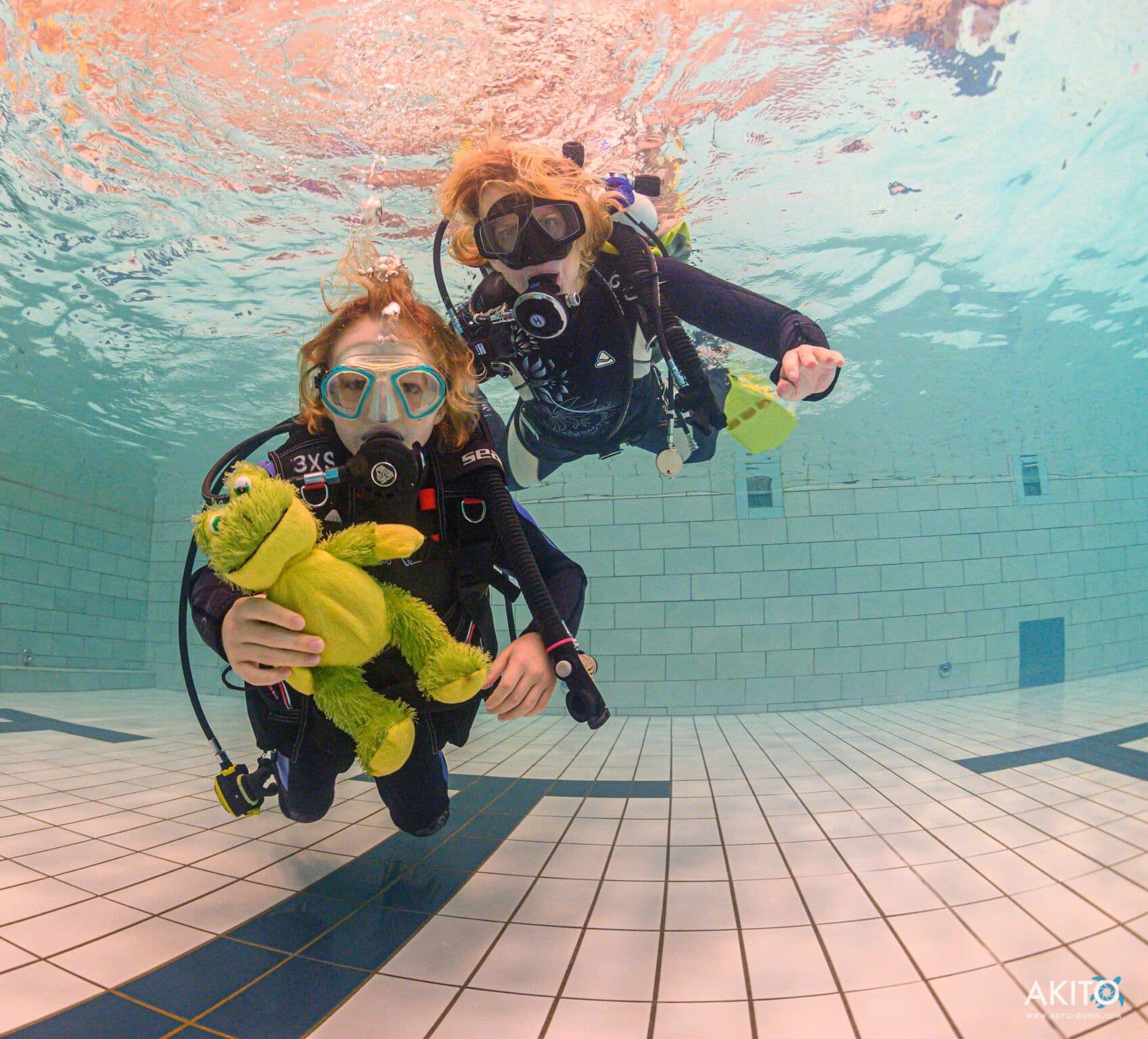
Diving with children when to start?
Let the experts do their work
If a parent and child opt to proceed with dive training, their diving course should be led by an experienced instructor with a good understanding of children and how to work with them. The instructor should know how to advise parents about the inherent risks that come with scuba diving. A parent can often be too strict or too protective; this can lead to stress or worry during class. As a dive instructor, I have experienced multiple situations when a child could not focus on diving or was stressed out by their parent, despite numerous warnings. I have grown fond of offering a family dive at the end of the course. This allows children to go through a training program with a parent either not present or present at a distance and experience a dive together once the class is complete. Parents are often impressed with the results of this approach: They witness their children grow, learn, and become self-sufficient divers and buddies.
Appropriate equipment
Children are still growing, some at a rate of nearly 15 cm/6 in per year. Diving equipment is heavy, so preventing strain in children's spines, joints, and key growth areas is a must. Help carry their equipment to the water and assist with putting it on and taking it off. Encouraging good teamwork and assistance to others often makes this component palatable for children: You can carry their tanks, and maybe they can carry your fins.
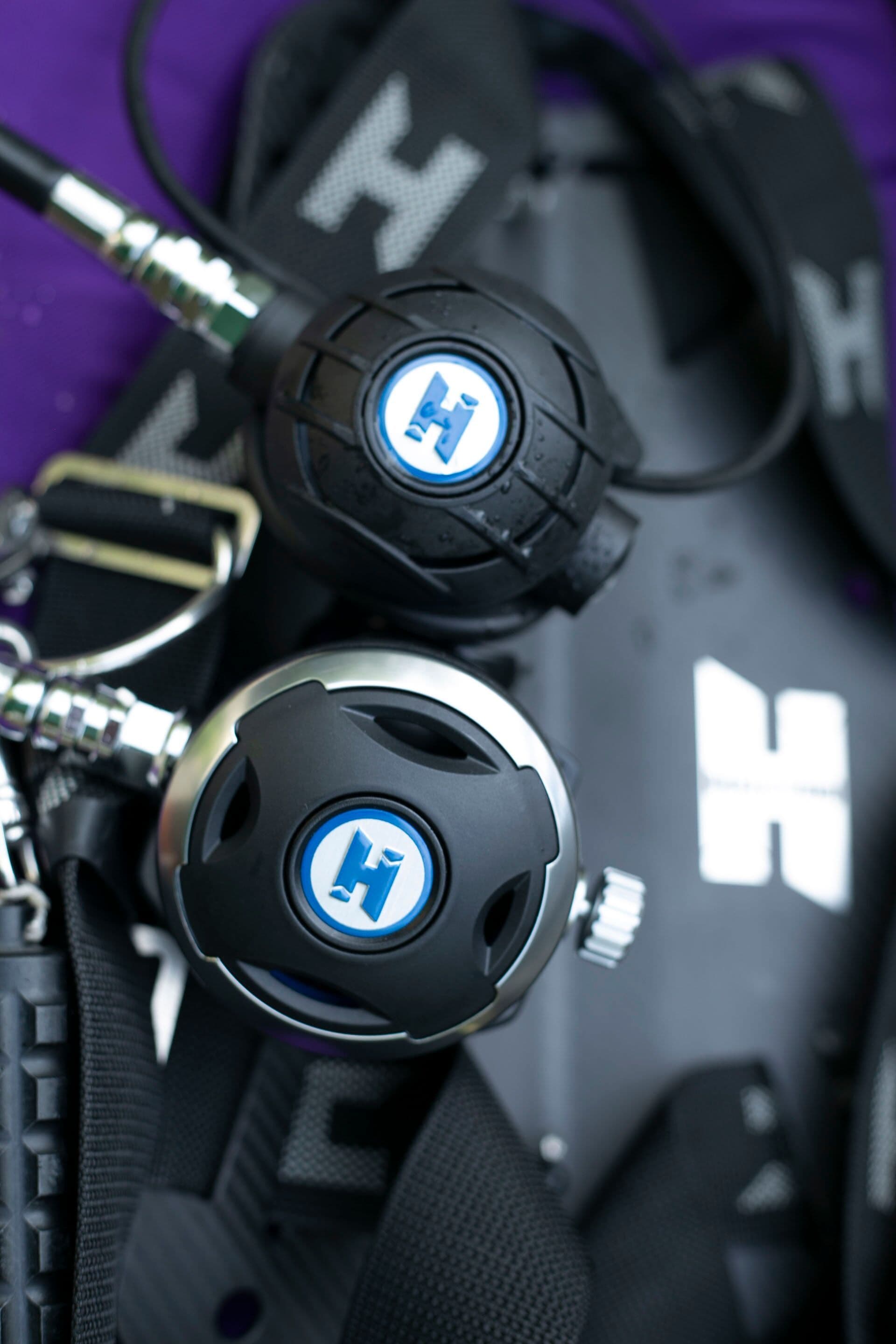
Halcyon Second stage Aura and Halo
Children can also get cold very quickly in the water. Sometimes, they will shiver but do not want to get out of the water. A sudden reaction to a cold environment can even make a child panic. So, how can we avoid this? Have them put on multiple layers, watch them during the dive, and adjust the time spent underwater based on the current temperature.
If the child requires glasses, make sure to use an appropriately sized dioptric mask. Many dive centers have these on hand or can easily order them before in-water work.
Provide equipment and a tank of appropriate size to child divers. An adjusted adult-sized buoyancy compensator, ill-fitting or tight fins, or bad mouthpieces can cause great discomfort for anyone, children included. Ensure the equipment is sized appropriately for the diver.
One of the most important details in equipment is the appropriately sized mouthpiece for a child, both for the regulator as well as the snorkel.
Even children can have health issues
Many people consider children to be inherently healthy. Do you think children cannot have symptoms of DCS (decompression sickness)? That they cannot have an open PFO (patent foramen ovale)? Quite the opposite! Even if they always comply with all standards and recommendations, children can exhibit DCS symptoms after a dive. Children are not small adults. The way they breathe, the anatomy of a child’s respiratory and circulatory system, the effect of pressure on ORL and tissues in children, the developing nervous system, and more differentiate them from adults and should be taken into consideration. Be mindful and aware of any issues before, during, or after the dive.
It should be fun!
Just as they remember their first school teacher, your kids will remember their first diving instructor. The instructor should not only teach them how to dive safely and properly but also to respect and care for nature. Be emphatic. Children should not dive when stressed. They always must know what, where, how, and when events are going to happen. They are more sensitive and vulnerable, and their problems, doubts, and fears can easily become overwhelming. They must not be afraid to say that they are not feeling okay, even if it means calling a dive. Sometimes all it takes is listening to them and trying to understand. Always, without exception, accept it if they do not want to go underwater! Listen and think about what the issue might be. Perhaps it could be a poorly understood underwater danger that they overheard someone else talking about, or maybe they just secretly watched the last part of Sharktopus or just did not sleep well enough
Last but not least – it should be their decision
Do not force them, just because you think it is a fun family activity. “If I had the opportunity at their age,” or “You will be the coolest kid in class,” are not also reasons for diving. Even though my partner and I are both diving instructors, our children only dive with us if and when they want to. They have their own hobbies; for them, diving is simply an occasion to have some fun in the summer here and there, not a lifestyle.
Diving is a wonderful sport. Nowhere in nature can you get as close to wildlife as you can underwater. Either way, the decision of whether it is the right time to take a diving course should be carefully considered by parents, instructors, and children. I wish you many beautiful diving adventures with your younglings!